Ruins of Dawn Forging Guide
Last updated on: 2026-08-17
Quick Answer
Use forging in Ruins of Dawn only after an item has already proven useful. The official Steam page confirms a unique forging system and random affix/rune style upgrades, but exact recipes, costs, success rates, and best outcomes need direct in-game verification.
Jump to a section!
Quick Answer
Use forging in Ruins of Dawn only after an item has already proven useful. The official Steam page confirms a unique forging system and random affix/rune style upgrades, but exact recipes, costs, success rates, and best outcomes need direct in-game verification.
Before You Forge
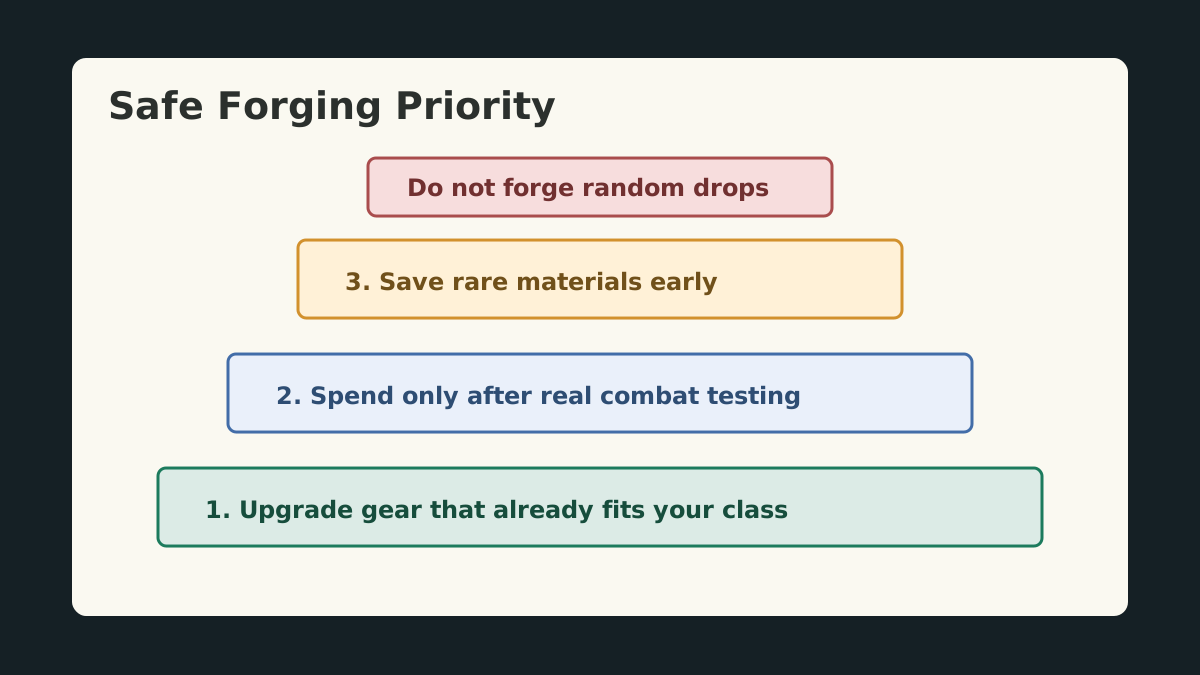
Prerequisite: do not spend scarce materials on throwaway gear. First decide whether the item helps your current class, improves a clear weakness, or supports a boss/rift attempt. If the answer is no, save the material.
How To Approach Forging
### Step 1: Pick A Candidate Item
Common Mistakes And Failure Recovery
- Mistake: forging the first rare item you find. Recovery: wait until the item survives several replacements. - Mistake: assuming a recipe from another ARPG works here. Recovery: only record what Ruins of Dawn itself confirms. - Mistake: upgrading damage when you are dying. Recovery: fix survival first. - Mistake: spending all materials before class testing. Recovery: read the class switching guide and pick a direction first.
Safe Upgrade Priority
Situation Safer Forging Goal Why --- --- --- Learning the game broad survival or flexible damage works across class tests Farming normal enemies clear-speed support more kills means more drops Boss attempts survival plus single-target value bosses punish weak defenses Late experimentation narrow class synergy only worth it after you know the class
Related Route
Use the loot guide to pick candidate items, the beginner guide to avoid early waste, and will Ruins of Dawn be good if you are deciding whether the forging loop is enough reason to buy.
Ruins of Dawn Forging Guide Overview
Forging is a commitment system, so beginners should approach it carefully. The safest rule is simple: do not upgrade gear before the item proves useful in real fights. A weapon or armor piece should support your class, improve repeated combat, and remain relevant after several loot comparisons. If you are still changing classes or replacing items quickly, save materials. Early patience gives you better information and prevents waste.
When Beginners Should Forge
Consider forging when an item passes three checks. First, it fits the class or playstyle you are using most often. Second, it improves a problem you can clearly name, such as damage, survival, or consistency. Third, it has lasted long enough that you are not likely to replace it immediately. If any of those checks fail, wait. A delayed upgrade is usually safer than spending materials because the button is available.
Forging Mistakes to Avoid
Do not forge every rare-looking drop. Do not upgrade items for a class you are no longer testing. Do not spend materials to solve a positioning or control problem that practice could fix. Do not assume a forged item will carry every activity type. Bosses, rifts, ruins, and trials may pressure different parts of your build. Good forging should support a plan you understand, not hide a plan you have not tested.
How Forging Connects to Loot and Classes
Forging decisions should come from loot and class evidence. If a class feels safe and a piece of gear supports that rhythm, forging can reinforce the route. If loot points in a different direction, pause and test before spending. Beginners should think of forging as the final step of an early decision chain: class feel first, loot comparison second, upgrade third. That order keeps the system useful instead of expensive.
Ruins of Dawn Forging Beginner Checklist
Use a checklist before spending materials. Does this item support the class you are actually playing? Has it helped in more than one fight? Does it solve a clear weakness such as low damage, poor defense, or unreliable recovery? Would replacing it soon make the upgrade feel wasteful? If you cannot answer these questions, wait. Forging is strongest when it strengthens a plan that already works. Beginners should use patience as a resource, because saved materials let you respond when a truly useful item appears.
Ruins of Dawn Forging Final Beginner Rule
The final beginner rule is to forge for a reason you can explain. If the reason is only that the item looks rare, wait. If the reason is that the item helps your class survive, clear enemies, or prepare for a boss or rift, the upgrade is easier to justify. This simple rule keeps forging connected to evidence from combat, loot comparison, and class testing instead of turning it into an automatic material sink.