Ruins of Dawn Beginner Guide
Last updated on: 2026-08-17
Quick Answer
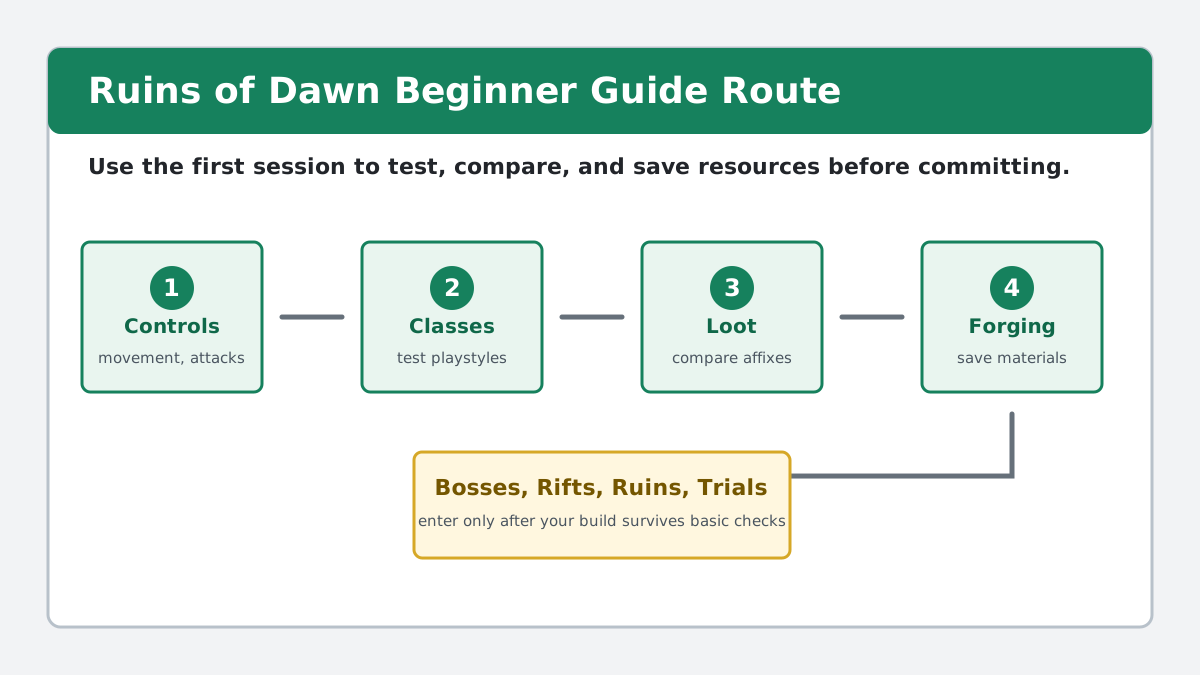
Use this Ruins of Dawn beginner guide as a first-session route: test movement and attacks, try class switching before committing, compare early loot in real fights, delay forging until an item proves useful, and prepare before bosses, rifts, ruins, or trials instead of treating your first build as permanent.
Jump to a section!
Quick Answer for This Ruins of Dawn Beginner Guide
The safest opening route is to treat the first session as a controlled test. Start by learning movement, attacks, inventory use, potion timing, and map reading. Then try each available class long enough to feel its range, survivability, and pace. After that, compare loot by how it performs in fights instead of judging only the biggest number on the item card. Save forging resources until you know which gear supports your preferred class rhythm. Before entering bosses, rifts, ruins, or trials, ask whether your current setup can survive mistakes, clear regular enemies, and recover when the fight becomes crowded.
Ruins of Dawn Beginner Guide: Before You Start
Before you chase a build, understand what is confirmed and what still needs in-game proof. Ruins of Dawn is presented as a loot-driven action RPG with class switching, random gear affixes, forging, bosses, rifts, ruins, and trials. That is enough to plan a beginner route, but it is not enough to publish exact class rankings, perfect recipes, or guaranteed drop tables. A useful beginner guide should therefore help you make good early decisions without pretending the whole game has already been solved. Open the settings first, check your preferred display mode and controls, and make the first area a testing space. If movement feels awkward or targeting feels unclear, fix that before evaluating classes or gear.
How to Follow This Ruins of Dawn Beginner Guide First Session Route
A strong first session has five phases. First, learn basic movement and attacks until you can fight without staring at the control prompts. Second, test class switching. Do not ask which class is best before you know which class you can pilot safely. Third, pick up early loot and compare it after several encounters. One item may look weaker in a menu but feel better because it supports your range, speed, or survival. Fourth, hold forging materials until a piece of gear has proven itself. Fifth, approach harder content only after your setup passes a basic survival check. This route keeps early decisions reversible and gives you a cleaner foundation for later optimization.
Early Loot and Class Choices for Beginners
Loot and classes should be tested together. A melee class, ranged class, or skill-focused route can value different affixes even when the equipment score looks similar. For beginners, the best item is not always the rarest item; it is the item that makes your current plan safer and easier to repeat. Compare how fast enemies die, how often you take damage, how quickly you recover, and whether the item changes your skill timing. If an item only looks good because it has a higher number, keep it as a test piece rather than instantly building around it. The same logic applies to class switching. Choose the class that lets you read fights, learn enemy behavior, and recover from mistakes before you chase speed.
Beginner Forging Priorities in Ruins of Dawn
Forging is tempting because it feels like progress, but beginners should treat it as a resource decision. Upgrade gear that supports a style you have already tested. If you are still switching classes every few minutes, do not spend scarce materials on a weapon that might stop fitting your plan. A better early rule is to wait until an item survives several comparisons: it helps you clear regular enemies, it does not make boss attempts worse, and it works with the class you actually enjoy. When you do forge, write down what changed. Did the upgrade increase clear speed, survival, or consistency? If you cannot notice the improvement in real play, the material might have been better saved.
Beginner Mistakes to Avoid in Ruins of Dawn
Most early mistakes come from moving too fast. New players often copy advice from unrelated games, sell gear before reading affixes, spend forging materials immediately, or assume class switching means every class is equally safe. Another common mistake is entering bosses, rifts, ruins, or trials before the build has passed normal combat. If a challenge kills you quickly, treat that as information. Step back, compare gear, test another class, or farm safer enemies before trying again. Do not turn one failed attempt into a permanent conclusion about the game. A beginner route is supposed to create useful evidence, not force a perfect build in the first hour.
What to Read After This Ruins of Dawn Beginner Guide
After this beginner guide, choose the next page based on your current problem. If you like the game but cannot settle on a playstyle, read the class switching guide. If your inventory feels noisy or you cannot tell which drops matter, read the loot guide. If you are afraid of wasting materials, read the forging guide before upgrading anything expensive. If you are getting stopped by harder encounters, read the bosses, rifts, ruins, and trials guide. The point of this Ruins of Dawn beginner guide is to give you a clean starting route; the related guides help you turn that first route into a more stable build plan.